
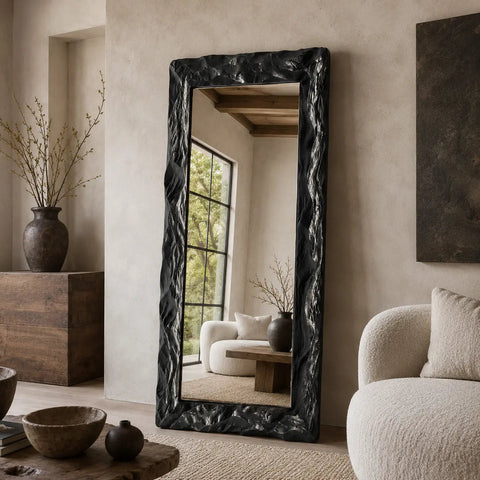

Modern interior design has evolved beyond ultra-flat minimalism and sterile geometries. Today’s sophisticated spaces prioritize tactile warmth, organic silhouettes, and sculptural depth. In place of mass-produced decor, contemporary luxury homes are defined by functional art pieces—objects that serve a daily purpose while standing as expressive focal points on their own.
Among these functional art pieces, the modern organic full-length mirror has emerged as an essential element for world-class interior designers. Featuring deep, hand-sculpted textures, organic wave contours, and rich tactile finishes, these mirrors redefine how light, shadow, and materiality interact within living areas, bedrooms, and galleries.
In this design masterclass, we explore the aesthetics of modern textured mirrors. Discover how raw organic frames, deep black sculptural finishes, and soft ambient pairings transform contemporary residential architecture into gallery-worthy sanctuaries.
Table of Contents
- 1. The Rise of Sculptural Design: Moving Beyond Flat Minimalist Frames
- 2. Tactile Materiality: Rock Formations, Ripple Textures, and Cast Metals
- 3. Styling the Dark Sculptural Frame in Light Neutral Interiors
- 4. Harmonizing Textures: Bouclé, Micro-Cement, and Raw Timber
- 5. Spatial Placement: Creating High-Contrast Gallery Anchors
- 6. Lighting the Sculpture: Plays of Chiaroscuro and Shadow Rays
- 7. Curating the Organic Suite: Modern Styling Pairings
- 8. Frequently Asked Questions
1. The Rise of Sculptural Design: Moving Beyond Flat Minimalist Frames
For years, modern design was dominated by ultra-thin, hairline metal mirror frames. While sleek, these understated frames often lacked character, disappearing into plaster walls rather than anchoring the room. The current movement toward Organic Modernism and Contemporary Brutalism seeks the opposite: presence, weight, and hand-hewn craftsmanship.
A sculptural full-length mirror commands the space. Its frame becomes an architectural relief—a continuous border of undulating ridges, hand-worked grooves, or stone-like textures that catch light at varying angles throughout the day. Rather than merely framing a reflection, the mirror frame itself becomes a piece of fine art.
2. Tactile Materiality: Rock Formations, Ripple Textures, and Cast Metals
What makes a modern mirror frame feel luxurious is its tactile depth. Designers look to natural earth elements for inspiration: volcanic basalt, weathered river stone, hand-molded clay, and rippling water surfaces.
The Art of the Chiseled Edge
Heavy textured black frames, like the one featured in our signature collection, evoke the raw beauty of hand-carved stone or oxidized cast metal. The deep chiseled facets create dramatic highlights and deep shadows, providing visual weight that grounds airy interior color schemes.
Organic Symmetry
Unlike rigid industrial borders, organic frames feature subtle variations along their perimeter. These organic contours introduce a human touch, softening the hard straight lines of door frames, ceiling soffits, and rectangular floor plans.
3. Styling the Dark Sculptural Frame in Light Neutral Interiors
One of the most effective techniques in high-end design is strategic high-contrast layering. A dark, textured black mirror set against a muted backdrop creates instant architectural focus without cluttering the room.
Pro Designer Technique: The High-Contrast Backdrop
Pair a bold, dark-framed textured floor mirror against chalky plaster walls, lime-wash finishes, or beige micro-cement. The light-absorbing wall texture makes the dark sculptural frame pop forward, turning a simple blank wall into a dramatic design moment.
This contrast prevents neutral rooms from feeling monochrome or flat. The dark frame anchors the room's color palette, allowing soft creams, warm woods, and beige linen upholstery to feel balanced and grounded.
4. Harmonizing Textures: Bouclé, Micro-Cement, and Raw Timber
A sculptural mirror should never exist in isolation. To achieve a cohesive Organic Modern aesthetic, surround your mirror with complementary materials that share its earthy, tactile qualities.
Consider these essential organic material pairings:
* Plush Bouclé & Shearling Upholstery: Soft, looped fabric seating creates a luxurious tactile contrast against the hard, chiseled surface of a dark mirror frame.
* Raw Solid Wood Coffee Tables & Pedestals: Timber pieces with visible grain lines reinforce the connection to natural, unrefined earth materials.
* Matte Ceramic Vases & Botanical Stems: Unglazed terracotta or dark stoneware vessels containing dry branches introduce organic silhouettes that mirror the frame's hand-carved ridges.
* Woven Jute & Wool Area Rugs: Natural floor coverings ground the mirror's base, connecting the floor plane smoothly to the wall plane.
5. Spatial Placement: Creating High-Contrast Gallery Anchors
Where you place an oversized organic mirror determines how effectively it shapes your home's spatial flow. Because of its bold visual texture, this mirror style thrives when given room to breathe.
The Leaning Statement Focal Point
Leaning an oversized, heavy-framed mirror at a gentle tilt creates an artistic, studio-like atmosphere. Placed in a living room corner, primary suite dressing area, or wide hallway nook, a leaning mirror captures upper ceiling beams, warm lighting fixtures, and distant window views.
Framing Architectural Alcoves
If your floor plan features recessed wall alcoves or structural drop-downs, position the mirror centered within the recess. The dark, sculpted frame outlines the alcove, giving custom architectural definition to standard drywall construction.
6. Lighting the Sculpture: Plays of Chiaroscuro and Shadow Rays
Sculptural frames are designed to interact with light. As natural daylight moves across your room from morning to sunset, the ridges and deep facets of a textured frame constantly transform, creating dynamic light and shadow effects (chiaroscuro).
Side-Angled Natural Light
Position your mirror where natural window light strikes the frame from a side angle rather than straight on. Side lighting emphasizes the depth of the carved ridges, accentuating every detail of the frame’s craftsmanship.
Warm Nighttime Ambient Glow
At night, avoid harsh direct overhead light that washes out textures. Instead, place a low-temperature floor lamp (2700K warm white) or a soft wall sconce next to the mirror. The gentle glow casts soft shadows across the frame's contours, creating a moody, high-end hotel lounge ambiance.
7. Curating the Organic Suite: Modern Styling Pairings
To fully integrate a luxury sculptural mirror into your residence, curate a thoughtful corner vignette that balances form, height, and function.
Start with your tall floor mirror as the vertical anchor. To its side, place a low, curving armchair upholstered in cream bouclé or textured linen. Beside the chair, add a low solid wood block table with a small matte black decorative bowl or vessel. Finish the arrangement with a tall floor vase holding slender, minimalist dry branches. This layered composition creates an inviting, magazine-worthy corner perfect for relaxing or checking your daily outfit.